
Artificial Intelligence (AI) is reshaping how businesses interact with customers, streamline operations, and deliver services. Among its most practical applications, AI chatbots have become an essential tool for customer support, lead generation, and personalized engagement. However, building an AI-powered chatbot from scratch often requires advanced coding knowledge, significant technical expertise, and large development teams.
This is where low-code/no-code (LCNC) platforms step in. These platforms empower business owners, marketers, and even non-technical professionals to design, deploy, and manage AI chatbots without writing extensive code. By simplifying development, LCNC platforms are bridging the gap between sophisticated AI technologies and real-world business needs.
In this blog, we’ll explore what low-code/no-code chatbot platforms are, why they are transforming AI chatbot development, the key benefits they offer, and the best practices to leverage them effectively in 2025.
What Are Low-Code/No-Code Platforms?
Low-code and no-code platforms are development environments designed to create applications with minimal programming:
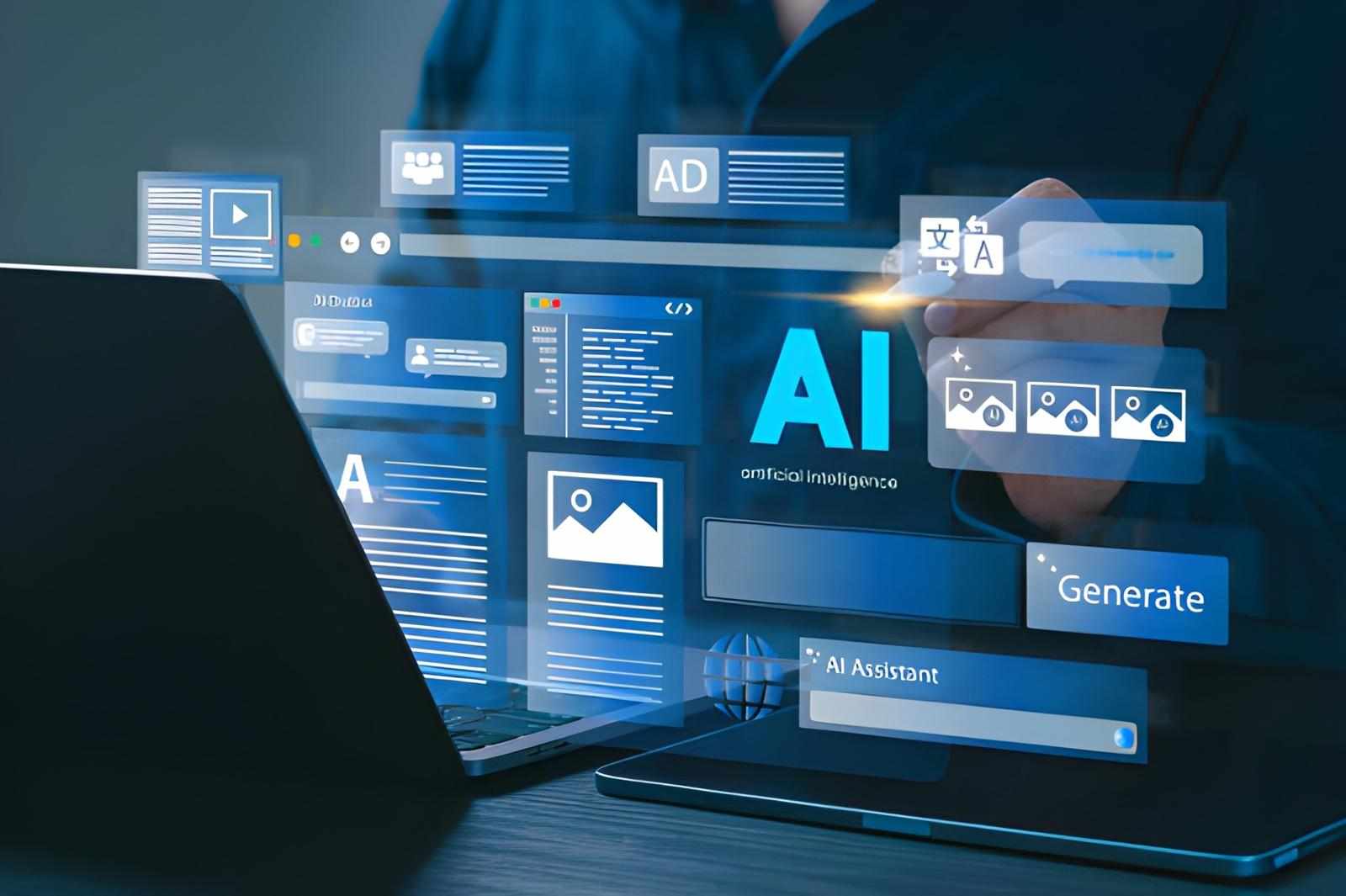
Low-Code Platforms: Allow developers to build applications faster using pre-built components, drag-and-drop interfaces, and visual workflows. Some coding may still be required for advanced customization.
No-Code Platforms: Completely eliminate the need for coding. They rely on intuitive visual builders, templates, and integrations, enabling non-developers to create functional apps.
For AI chatbot development, LCNC platforms provide tools like natural language processing (NLP) engines, intent recognition, pre-built conversation templates, and integrations with business systems (CRM, ERP, e-commerce platforms, etc.).
Why LCNC Platforms Are the Future of AI Chatbot Development
The global demand for chatbots is growing rapidly. According to industry reports, the chatbot market is projected to reach over $15 billion by 2030, driven by customer service automation and digital-first experiences.
Traditionally, developing AI chatbots required skilled developers, data scientists, and large budgets. But in 2025, businesses need agility, faster time-to-market, and cost-effective solutions. LCNC platforms make this possible by:
Reducing dependency on coding skills.
Accelerating deployment timelines.
Lowering development costs.
Enabling collaboration between business teams and technical teams.
This democratization of chatbot development allows startups, small businesses, and enterprises to adopt AI-driven automation without being bottlenecked by technical constraints.
Key Benefits of Low-Code/No-Code Chatbot Development
1. Faster Time-to-Market
With drag-and-drop builders, pre-designed templates, and AI-powered tools, businesses can create and launch chatbots in days or weeks instead of months.
2. Cost-Effective Development
Hiring specialized developers can be expensive. LCNC platforms minimize reliance on large technical teams, helping businesses save significantly on development and maintenance costs.
3. Empowering Non-Technical Teams
Marketing, sales, and customer support teams can design and manage chatbot workflows themselves, reducing the dependency on IT.
4. Easy Integration with Existing Tools
Most LCNC chatbot platforms support integrations with CRM systems (Salesforce, HubSpot), messaging platforms (WhatsApp, Messenger), and e-commerce platforms (Shopify, WooCommerce).
5. Scalability
From handling a few hundred conversations to millions of interactions, LCNC platforms offer scalable infrastructure that grows with the business.
6. Continuous Improvement with AI
These platforms often include built-in AI models that learn from user interactions, improving intent recognition, personalization, and customer satisfaction over time.
Popular Low-Code/No-Code Platforms for AI Chatbot Development in 2025
Here are some of the leading platforms businesses are using today:
1. Dialogflow (by Google Cloud)
Natural language understanding powered by Google AI.
Supports multi-platform deployment (web, mobile apps, social media).
Low-code environment with integrations into Google ecosystem.
2. Microsoft Power Virtual Agents
No-code chatbot builder integrated with Microsoft Power Platform.
Drag-and-drop authoring canvas.
Strong integration with Teams, Dynamics 365, and Azure AI services.
3. ManyChat
Popular no-code platform for marketing automation chatbots.
Specializes in Messenger, Instagram, and WhatsApp.
Designed for e-commerce, lead generation, and customer engagement.
4. TARS
Drag-and-drop interface for creating conversational landing pages.
Excellent for lead generation and customer onboarding.
Offers analytics to optimize chatbot performance.
5. Botpress
Low-code, open-source chatbot development framework.
Great for developers who want customization with pre-built components.
Supports advanced AI workflows and integrations.
6. Landbot
No-code platform for creating web and WhatsApp chatbots.
Highly visual flow builder.
Best suited for startups and SMBs.
Use Cases of LCNC AI Chatbots
Low-code/no-code AI chatbot platforms are versatile and can be applied across multiple industries:
1. Customer Support
Chatbots can answer FAQs, process returns, and troubleshoot common issues, reducing wait times and improving customer satisfaction.
2. E-Commerce Assistance
AI chatbots can recommend products, assist with order tracking, and process payments directly within messaging apps.
3. Healthcare
Patients can book appointments, receive medication reminders, and access health information through chatbot interfaces.
4. Banking and Finance
Banks use AI chatbots to assist customers with transactions, account details, fraud alerts, and financial planning.
5. Education and E-Learning
Chatbots can deliver personalized lessons, answer student queries, and act as 24/7 teaching assistants.
6. Human Resources
AI chatbots help with onboarding, answering HR-related questions, and managing employee requests.
Challenges and Limitations
While LCNC platforms make chatbot development easier, they also come with certain challenges:
Limited Customization – Some platforms restrict advanced functionalities that may require coding.
Integration Complexity – Connecting chatbots with legacy systems can still require technical expertise.
Dependence on Vendor Ecosystems – Businesses may face vendor lock-in if tied to a particular LCNC platform.
AI Training Needs – Although AI engines are built-in, businesses still need to train the bot with domain-specific data for better accuracy.
Best Practices for Success
To maximize the potential of low-code/no-code chatbot development, businesses should follow these practices:
Define Clear Objectives – Whether it’s lead generation, support automation, or sales, clarity of purpose ensures better design.
Start Small, Then Scale – Begin with simple FAQs or transactional tasks, and expand the chatbot’s scope gradually.
Personalize the Experience – Use customer data to tailor conversations and deliver contextual responses.
Test and Optimize Regularly – Monitor chatbot interactions, identify drop-offs, and refine workflows.
Ensure Human Handover – Provide an option for users to connect with a live agent when the chatbot cannot resolve complex queries.
How Businesses Can Leverage Experts Alongside LCNC Platforms
While LCNC platforms empower non-technical teams, businesses still benefit from working with experts to ensure robust strategy, security, and scalability. An AI chatbot development company can help enterprises integrate LCNC solutions with existing systems, customize them for specific industries, and optimize AI models for accuracy.
Similarly, organizations looking to expand into automation can explore ai chatbot development services for tailored solutions. Some providers also offer ai chatbot development solutions that combine LCNC platforms with advanced AI capabilities. For businesses without in-house expertise, partnering with professionals and choosing to Hire ai chatbot developer ensures that the chatbot aligns with customer needs and business goals.
In addition, chatbot initiatives can integrate with broader ai agent development strategies, enabling multi-tasking AI agents that handle complex workflows beyond simple conversations. Working with an ai development company ensures that businesses can seamlessly blend low-code/no-code chatbots with custom-built AI systems, providing a holistic automation strategy.
Conclusion
Low-code/no-code platforms have revolutionized the way businesses build AI chatbots. By eliminating technical barriers, these platforms empower organizations of all sizes to deliver AI-driven customer experiences quickly and cost-effectively.
In 2025 and beyond, LCNC platforms will continue to democratize AI chatbot development, making advanced conversational AI accessible to startups, small businesses, and enterprises alike. Combined with expert guidance and integration support, they represent a powerful pathway to smarter, faster, and more personalized customer engagement.
For businesses aiming to stay ahead in the digital-first era, embracing low-code/no-code platforms for chatbot development is no longer an option—it’s a necessity.














Write a comment ...